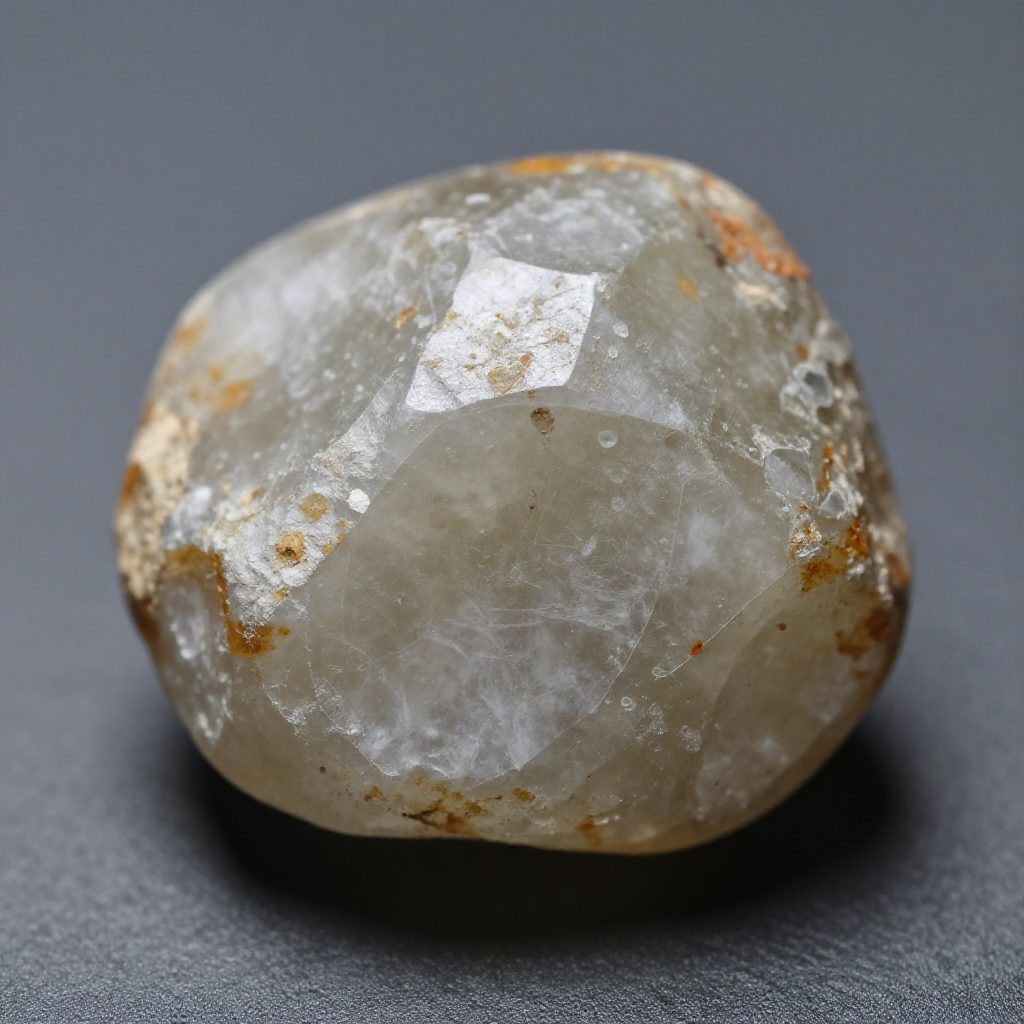
You picked it up because of the color: a flash of purple, a streak of green, something glassy catching the light in a way ordinary gravel doesn't. The question that follows is almost automatic. Is this a gemstone? The honest answer starts with a harder one: color tells you almost nothing on its own, and the checks that do work take about five minutes with tools you probably already own.
Color Is the Least Reliable Clue You Have
Dozens of common minerals share the same hue. Iron impurities alone can tint quartz purple, yellow, pink, or brown, which is why amethyst, citrine, rose quartz, and smoky quartz are all the same mineral wearing different trace elements. Copper turns multiple unrelated minerals green or blue. A single species can also range across several colors depending on what got trapped in its structure while it formed. If color were diagnostic, field guides wouldn't need the other four pages of tests. It isn't, so they do.
The Four Checks That Actually Narrow It Down
None of these require a lab. They require patience and a willingness to test the rock instead of just admiring it.
Hardness: The Scratch Test That Rules Things Out Fast
The Mohs scale runs from talc at 1 to diamond at 10, and the rule never flips: a harder material scratches a softer one, never the reverse. A fingernail tests around 2.5. A steel knife blade or file sits near 6 to 6.5. Quartz is a 7, which means an ordinary steel file will not scratch quartz. If your rock shrugs off a file, you've just eliminated a long list of softer look-alikes, including calcite, fluorite, and most carbonate minerals, in about ten seconds.
Skip the penny trick if you can, or use it carefully. Pre-1982 U.S. pennies are close to solid copper, hardness around 3.5, and can scratch soft minerals like calcite. Pennies minted after 1982 are zinc cores with a thin copper plating, and the worn plating gives inconsistent results. A steel file or a known quartz point makes a more reliable reference than a coin from your pocket.
Crystal Habit: Does It Have a Shape, or Just a Surface
Crystal habit is the form a mineral grows into when it has room to do so: quartz builds six-sided prisms that taper to a point, pyrite and fluorite favor cubes, calcite splits into rhombohedral blocks along its cleavage planes. A specimen with visible faces and consistent angles is telling you what it is before you run a single other test.
Most field finds don't cooperate. A rounded, tumbled pebble with no flat faces has usually been carried by water or worn down over time, and it may be a fragment of something that once had a clean crystal form. That's not a dead end, just a sign you need the remaining checks to do more of the work.
Luster: The Diagnostic Most Beginners Skip
Luster describes how a surface reflects light, and it's more consistent than color across a given mineral. Quartz and most silicates are vitreous, meaning glassy. Chalcedony and jasper tend toward waxy or resinous. Pyrite, galena, and hematite are metallic, often startlingly so. Weathered or clay-altered surfaces go dull and earthy. Learning to sort a specimen into one of these buckets by eye takes practice, but it narrows the field of candidates faster than color ever will, and it costs nothing to check.
Transparency and Opacity
Hold the piece up to a light source. Transparent material lets you read text through it. Translucent material passes light but blurs whatever's behind it. Opaque material blocks light entirely. This one comes with a catch worth knowing: a single mineral can show up in all three states. Quartz appears as water-clear rock crystal, translucent chalcedony, and fully opaque jasper, depending on how it formed. Transparency alone won't name your rock, but paired with hardness and habit, it closes off entire categories fast.
Three Mix-Ups Worth Naming Directly
Clear Quartz Isn't Diamond
This is the single most common false alarm in rockhounding. A clear, glassy point looks convincing, especially if it has decent crystal faces. But quartz is a 7 on the Mohs scale and diamond is a 10, a difference a steel file resolves in seconds. The bigger tell is optical: diamond bends and disperses light dramatically, producing the flashes of color known as fire. Quartz, with a much lower refractive index, just doesn't do that. Side by side, the difference is obvious once you know to look for it.
Green Doesn't Mean Emerald
Green fluorite, epidote, and dyed or green-tinted quartz all turn up in the field far more often than actual emerald, and all three can produce a genuinely striking green. True emerald is a variety of beryl, harder at roughly 7.5 to 8 on the Mohs scale, and gem-grade material is rare enough that even jewelry-quality stones are usually included and fractured rather than flawless. A green rock is interesting. It is very unlikely to be emerald, and that's worth saying plainly rather than letting the color do the talking.
Glass and Slag Aren't Stone
Beach glass, dropped bottle glass, and industrial slag from smelting operations all fracture the same way natural stone often does, with the same curved, shell-like conchoidal break as obsidian or chert. The giveaways are usually bubbles trapped in the material, a suspiciously uniform color throughout, or, for slag, a rough vesicular texture left over from cooling. None of that is a flaw in your identification skills. Man-made glass genuinely mimics natural stone well enough to fool people who've been rockhounding for years.
What It Probably Is (and Why That's Fine)
Run the hardness test, look at the crystal habit, check the luster, hold it to the light. Most of the time, a colorful field find turns out to be one of a small handful of common, honest minerals: quartz in one of its many forms, feldspar, calcite, or a weathered fragment of something similar. That's not a letdown. True gem-quality material is rare by definition, which is exactly why it commands attention when it does turn up. An honest identification of a common mineral is worth more than a hopeful guess at a rare one.
For a fuller rundown of these same tests applied step by step, see how to identify a rock you found: five tests. And if this specimen has you curious about where gem-quality material actually comes from and how it differs from the common look-alikes, the gemstones and crystals field guide is the next stop.